

 See My Latest Article on HelloNation
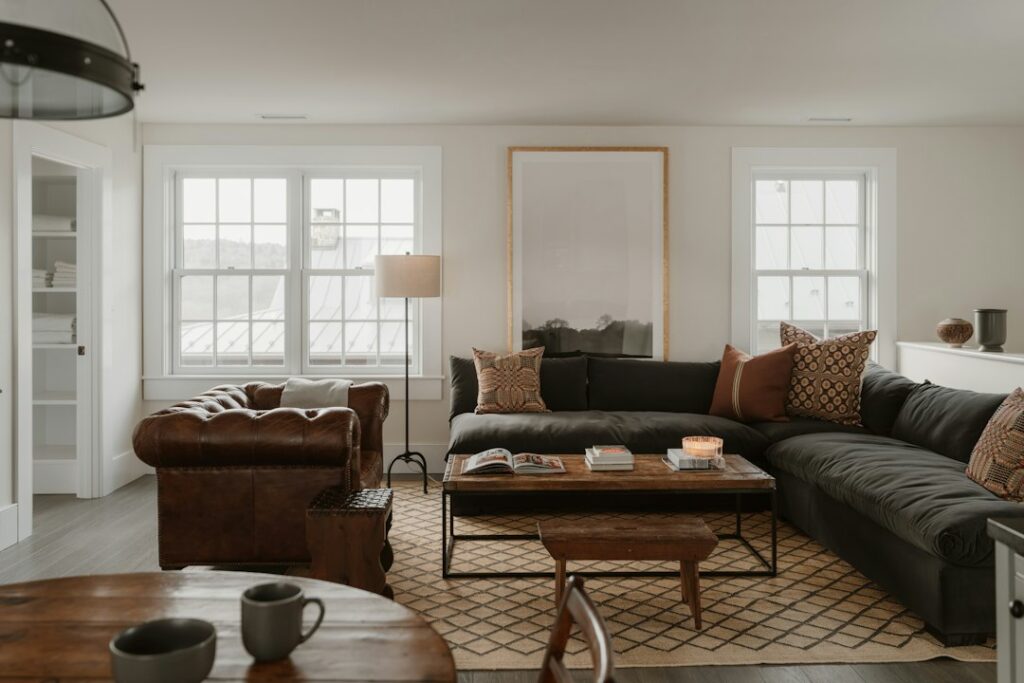
Which is better for most rooms: a sectional or a sofa?
Neither option is universally better. A sofa usually offers more flexibility, easier movement, and a lighter visual footprint. A sectional generally provides more seating, creates a defined lounging area, and can make efficient use of a large room.
The right choice depends on room dimensions, traffic patterns, household habits, and how much flexibility may be needed later. In Charlevoix, where homes may serve both year-round residents and seasonal households, furniture also needs to work with changing routines, guests, storage needs, and varying indoor activity during colder months.
How does a sectional differ from a sofa?
A sofa is a single seating piece, usually designed for three or more people. It can stand alone or be paired with chairs, a loveseat, ottoman, or bench.
A sectional is made of multiple connected seating sections arranged in a shape such as:
- L-shaped
- U-shaped
- Curved
- Modular, with movable pieces
Sectionals often include a chaise, which extends seating along one side. This creates a place to stretch out but also affects how people enter, exit, and move through the room.
The main distinction is flexibility. A sofa can usually be repositioned more easily and used in several room layouts. A sectional provides more continuous seating but is more dependent on the shape and dimensions of the room.
When does a sofa make more sense?
A sofa is often the more practical choice for a small, irregular, or frequently changing room. It can sit against a wall, float in the center of a room, or serve as one part of a larger seating arrangement.
A sofa may be preferable when:
- The room is narrow or has several doorways
- Furniture may need to be rearranged
- The household expects to move in the future
- Seating is needed without blocking walkways
- The room also serves as an office, play area, or sleeping space
- A separate chair or ottoman would be useful
Sofas also make it easier to create conversation areas. Two chairs can face the sofa, for example, while leaving a clear path to a hallway, porch, or adjoining room.
For older homes or rooms with tight stairways, narrow halls, and smaller door openings, a sofa may also be simpler to deliver and place. Measuring the entry route matters just as much as measuring the room itself.
When is a sectional the better fit?
A sectional works well when a room is large enough to support its full footprint and the household prefers shared lounging over separate seating. It can anchor an open living area and help divide a broad space without adding a wall.
A sectional may be a strong fit when:
- Several people regularly watch television or gather together
- The room has a clear corner that can accommodate an L-shape
- Stretch-out seating is a priority
- The space is used for family gatherings or overnight guests
- There is enough room for walkways around the furniture
- A single coordinated seating arrangement is preferred
In an open floor plan, a sectional can define the living area. Positioning the back toward a dining area or entry zone can establish a visual boundary while keeping the room connected.
The main caution is scale. A sectional that looks comfortable in a showroom may overwhelm a living room once walls, windows, radiators, tables, lamps, and walking paths are included.
Which option is better for small living rooms?
A sofa is usually easier to fit in a small living room, but a compact sectional can work if its dimensions are carefully planned. The deciding factor is not only floor area; it is usable floor area after accounting for doors, windows, heating equipment, and circulation.
A practical walkway is often more valuable than adding one extra seat. Leave enough clearance for people to move naturally between the main entrance, seating, storage, and other frequently used areas. Avoid placing the chaise across the only route through the room.
Before purchasing furniture, mark the proposed footprint with painter’s tape or folded blankets. This reveals whether the piece interferes with doors, cabinet access, vents, or the opening of nearby windows.
Which provides more comfortable seating?

Sectionals often feel more comfortable for relaxed lounging because they offer longer seating surfaces and a chaise. They allow several people to sit together without arranging chairs around a central table.
A sofa can be equally comfortable, but comfort depends more on seat depth, cushion firmness, back height, arm shape, and upholstery than on the furniture category itself.
Check whether:
- Feet rest comfortably on the floor
- The knees are supported without pressure behind them
- The back cushion supports an upright posture
- The seat is deep enough for lounging but not so deep that sitting becomes awkward
- Arms are positioned comfortably for reading or conversation
- Cushions remain stable when people sit at different points
A very deep sectional may suit relaxed evenings but be less comfortable for guests who prefer upright seating. A shallower sofa may work better in a room used for conversation, reading, or frequent entertaining.
Are sectionals harder to rearrange?
Yes, generally. A standard sofa can be moved and paired with different chairs or tables as needs change. A sectional is more dependent on its orientation, particularly if the chaise or corner piece is fixed.
This matters in rooms that change seasonally. Area households may use living spaces differently during summer gatherings than during long periods spent indoors in winter. A sofa and movable chairs can adapt more easily to those shifts.
Some sectionals use separate modules that can be reconfigured. These offer more flexibility, but the pieces still require adequate clearance and may not fit every possible arrangement. Before choosing a modular design, confirm whether the sections lock together securely and whether each configuration provides proper support.
What should households consider in Charlevoix?
Local conditions can influence how furniture performs and how often a room is used. Snow, damp outerwear, sandy footwear, and frequent entry from outside can increase the amount of moisture and debris brought indoors. Furniture placed near an entry should leave room for mats, storage, and clear passage.
Homes near the water or in areas with strong seasonal humidity may also benefit from breathable, durable upholstery and regular cleaning. Direct sunlight through large windows can gradually fade some fabrics, so placement and window coverings deserve attention.
For seasonal homes, consider how the room will function when fewer people are present and when guests arrive. A large sectional may be useful for gatherings but unnecessarily dominant during quiet periods. A sofa with an ottoman or occasional chair can provide more adaptable seating throughout the year.
Which is easier to clean and maintain?
A sofa is often easier to clean around because it has a simpler footprint. A sectional has more seams, corners, and concealed areas where dust, crumbs, pet hair, and small objects can collect.
Maintenance depends on the construction and upholstery. Look for removable cushion covers when practical, durable stitching, and fabric that can be cleaned according to its care instructions. Avoid assuming that every removable cover can be machine washed; some require specialized cleaning or may shrink.
Keep furniture slightly separated from damp exterior walls when possible, and avoid blocking heating vents. Vacuum beneath cushions and along the back regularly, especially during periods when the room is heavily used.
How should the final choice be made?
Start with measurements rather than style. Record the room’s length and width, then note every doorway, window, vent, radiator, built-in cabinet, and major traffic path. Measure the delivery route from the entrance to the intended room.
Choose a sofa if flexibility, easier movement, or a lighter arrangement matters most. Choose a sectional if the room can support it comfortably and the household prioritizes shared lounging and maximum connected seating.
A useful test is to imagine the room with the furniture in place on an ordinary day, not only during a gathering. If people can move easily, open doors, reach tables, and use the room without squeezing past the upholstery, the scale is probably appropriate.