

 See My Latest Article on HelloNation
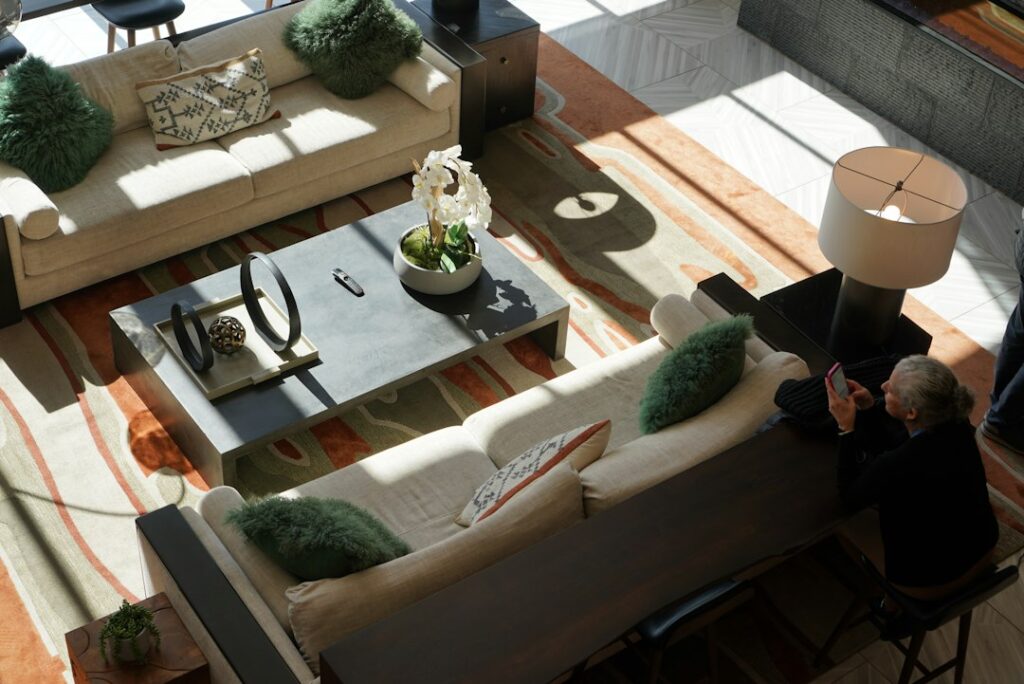
A sofa is one of the largest and most frequently used pieces of furniture in a living room. The right choice should fit the room physically, support the household’s daily routines, and stand up to local conditions such as tracked-in moisture, seasonal clothing, pets, guests, and changing indoor humidity.
What should be measured before buying a sofa?
Measure the living room, the intended wall, and the route the sofa will take from the entry door to its final position. A sofa that fits the room may still be impossible to move through a narrow doorway, hallway, stairwell, or tight turn.
Record these measurements:
- Wall length and available width
- Ceiling height
- Doorway and hallway widths
- Stairway width and landing space
- Window, radiator, vent, and electrical outlet locations
- Distance between the sofa and coffee table
- Clearance around doors, walkways, and other furniture
A practical seating area usually needs clear walking space rather than furniture pushed tightly against every wall. Leave enough room to walk around the sofa without brushing against tables or armrests. In smaller living rooms, a compact sofa with raised legs can make the floor feel more open than a deep, low-profile design.
Do not rely only on listed exterior dimensions. Arm thickness, reclining mechanisms, removable backs, and unusually deep cushions can affect how a sofa fits through an entrance.
How large should a sofa be for the room?
The sofa should be proportional to the room, not simply as large as possible. A large sectional can provide generous seating, but it may overwhelm a smaller space or limit future furniture arrangements.
For a compact living room, consider:
- A two- or three-seat sofa with narrow arms
- A moderate seat depth
- Exposed legs or a lighter visual frame
- A separate chair or ottoman instead of a larger sectional
For a larger room, a deeper sofa or sectional may work well if it does not block circulation. Sectionals deserve special attention because the chaise or return portion determines how people move through the room. Before choosing a left-facing or right-facing configuration, picture the sofa from the front and confirm which side the extended section occupies.
A useful test is to mark the sofa’s footprint on the floor with painter’s tape or folded blankets. This reveals whether doors open properly, walkways remain comfortable, and nearby furniture still has usable space.
What seat depth and height are most comfortable?
Seat height and depth affect comfort more than appearance. A deep sofa may look inviting but can be uncomfortable for shorter adults, children, or anyone who prefers an upright sitting position.
As a general guide:
- Standard seat heights often feel easier for everyday sitting and standing.
- Deeper seats suit lounging, reading, and reclining.
- Shallower seats are often more supportive for upright conversation.
- Firm, supportive cushions are usually easier to rise from than very soft cushions.
- A sofa with a higher back may provide better support for long sitting sessions.
Sit on a sofa for several minutes before judging it. Check whether both feet can rest comfortably on the floor, whether the lower back is supported, and whether the knees bend naturally at the edge of the cushion. If the sofa will be shared by people of different heights, a middle-ground seat depth and height may be more practical than choosing for only one person.
The visible size of a sofa can also be misleading. Thick arms reduce usable seating width, while slim arms provide more room without increasing the overall length.
Which upholstery materials are practical for everyday use?
The best upholstery depends on how the sofa will be used. A formal living room may tolerate more delicate fabric than a household where people eat, nap, entertain, or spend time with pets.
Consider these material characteristics:
- Tightly woven fabric: Often practical for regular use because loose loops are less likely to catch.
- Performance-oriented textiles: Designed to resist some stains and wear, but still require prompt cleaning.
- Leather: Can be easy to wipe, though it may feel cool in winter, warm in summer, and show scratches or changes in surface appearance.
- Velvet or textured fabrics: Comfortable and visually appealing but may show pressure marks, dust, or directional shading.
- Loose-weave fabrics: Can be more vulnerable to snags from claws, buckles, and rough clothing.
Color matters as well. Very pale upholstery can show dirt quickly, while very dark fabric may reveal lint, pet hair, or salt residue from winter clothing. Medium tones and subtle patterns often conceal everyday variation better than solid extremes.
Before deciding, ask how the fabric should be cleaned, whether cushion covers can be removed, and whether cleaning instructions allow water-based products. A material that cannot be cleaned in a household’s usual way may become frustrating even if it looks attractive.

How should a sofa hold up during Charlevoix winters?
In Charlevoix, wet outerwear, snow, road salt, boots, and heavier layers can bring more moisture and debris indoors during the colder months. The sofa does not need to be treated like outdoor furniture, but its location and fabric should accommodate seasonal habits.
Avoid placing upholstered seating directly beside an entry path if people routinely come inside wearing wet coats or boots. A nearby mat, coat storage area, and clearly defined drop zone can reduce what reaches the living room.
Look for upholstery that is:
- Easy to vacuum along seams and under cushions
- Resistant to visible pilling and everyday abrasion
- Reasonably forgiving of moisture and dirt
- Comfortable with blankets or washable throws during cold weather
Allow furniture to remain away from heating vents and direct heat sources. Dry air can affect some wood components, while concentrated heat may contribute to uneven aging or discomfort. Balanced indoor humidity and regular dust removal help protect both upholstery and the sofa frame.
What construction details should be checked?
A sofa’s internal construction affects how it feels after years of use. Examine the frame, cushion support, and moving parts rather than judging only by fabric and shape.
Check whether:
- The frame feels solid when the sofa is gently pushed from different directions
- The legs are securely attached
- Seat cushions remain aligned after sitting
- Back cushions return to shape without excessive flattening
- Reclining or sleeper mechanisms operate smoothly, if included
- Removable cushions have finished edges and practical cleaning instructions
A sofa does not have to be extremely heavy to be well made, but excessive movement, creaking, uneven cushions, or loose joints may signal problems. For households that use the sofa every day, reversible seat cushions can help distribute wear when the cushion design permits it.
Is a sleeper sofa or reclining sofa right for the room?
Special features are useful only when the room can accommodate them. A sleeper sofa needs enough floor space to open fully, with room for people to move around the extended bed. Measure the opened length rather than relying on the closed sofa dimensions.
Reclining sofas need clearance behind and in front of the seats. Wall-hugger designs may require less rear space, but they still need room for footrests and safe movement. Avoid positioning reclining furniture where an open footrest could block a doorway or create a tripping hazard.
If guests visit only occasionally, a standard sofa paired with a separate sleeping arrangement may preserve more everyday floor space. If overnight use is frequent, test the mattress or sleeping surface rather than assuming every sleeper mechanism provides the same support.
How can color and style remain useful over time?
Choose a sofa shape and color that work with the room’s existing floors, walls, lighting, and natural materials. Trends change more quickly than a durable sofa should. A simple silhouette can be updated with pillows, throws, artwork, or a rug without replacing the main piece.
Before choosing a color, observe the room in morning, afternoon, and evening light. Northern-season daylight, warm lamps, and nearby wood flooring can change how upholstery appears. Also consider whether the sofa will need to coordinate with seasonal blankets, holiday decorations, or furniture used in adjoining spaces.
The most reliable choice is one that meets the household’s actual needs: correct dimensions, comfortable support, manageable maintenance, and enough durability for daily life. A sofa should make the room easier to use, not require the room to be reorganized around it.